This week I got the chance to learn about civic imagination, which is “the capacity to imagine alternatives to current cultural, social, political, or economic conditions; one cannot change the world unless one can imagine what a better world might look like.”
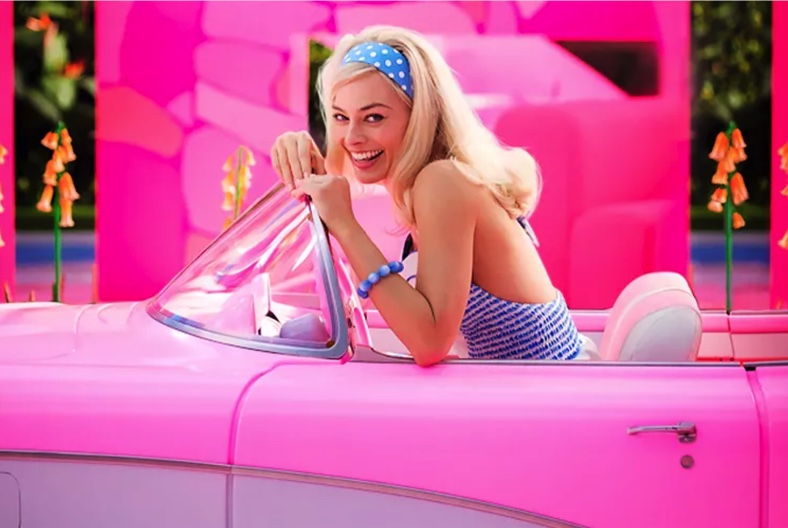
For this topic, I selected the movie Barbie (2023), directed by Greta Gerwig. On a surface level, Barbie is about a fantasy world where all the barbies live in a perfect Barbieland, women are in charge, and everyone is happy. Women hold all the leadership positions like president, lawyers, judges, scientists, etc. However, the men, or Kens, fawn over the Barbies day after day but the Barbies never give in to what the men want because they have their girls. Barbieland serves as a cultural critique of the gender roles and power structures present today. The inversion of power reimagines current societal reality which is filled with patriarchy.
Patriarchy is something Ken learns about in the movie. Stereotypical Barbie is losing her Barbie abilities and is having thoughts of death, so she is sent to the real world where Ken joins her. To Barbie’s surprise, the real world is nothing like Barbieland, men disrespect her, people aren’t as kind, and Ken seems to think everything will come easy to him because he is a man. Women also don’t have to fight for any type of equality in Barbieland, so when Barbie is in the real world, she faces shock at what other women have to go through. The movie provides a comedy aspect to what life may look like if women had always been the default power holders instead of men, and if men had to conform to norms that women have taken on. The film ultimately challenges the audience to envision a world where equality, empathy, and shared leadership are the norm rather than the exception.
The imagined alternative presented in Barbie would require systemic change rather than technological innovation. The film critiques deep-rooted societal systems like workplace discrimination, gender expectations, and media representation. Creating a real world version of Barbieland would involve reforming those systems and ensuring women have equal access to education, leadership roles, and fair pay, while also redefining masculinity.
On a broader level, the film indirectly calls for changes in media and cultural systems too. For decades, the Barbie brand has symbolized unrealistic beauty standards and consumerism. Gerwig’s adaptation transforms that legacy by using the very image of Barbie to dismantle the idea that perfection and power are the same thing. In this sense, the film itself becomes part of the systemic change, reclaiming a commercial icon and reimagining her as a symbol of self-awareness, imperfection, and equality. The film also displays an abundance of different Barbies. They all look differen, have different strengths and personalities, because in reality, no woman is the same and can’t conform to a single beauty standard.
Barbie shows us an exaggerated, opposite world to make us more aware of our own, which is where civic imagination is so important. The film’s imagined alternative isn’t just a dreamlike pink utopia (although it would be nice to vacation there), it’s an invitation to keep imagining, questioning, and creating a more balanced and fair reality.


Leave a comment